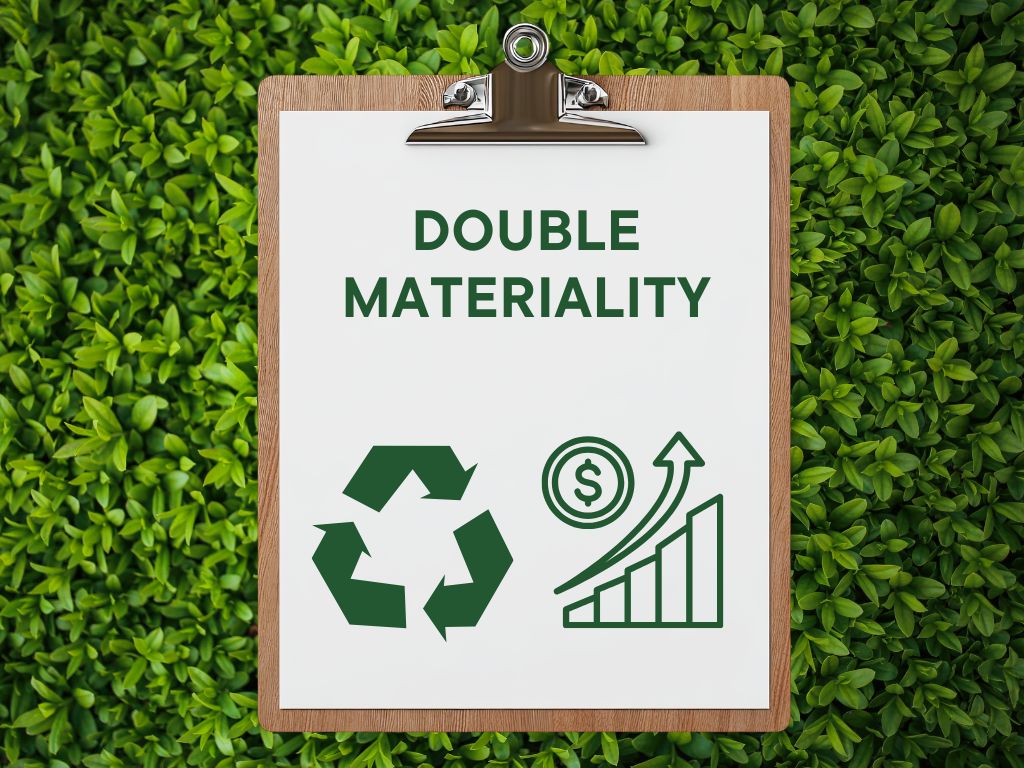
Sustainability is no longer just a marketing angle — it’s becoming a core business requirement. Across the European Union, new regulations and shifting consumer expectations are pushing companies to rethink how they operate. One concept gaining particular importance is double materiality.
While it may sound technical, double materiality has very practical implications — especially for restaurant chains. From rising packaging costs to customer loyalty and regulatory compliance, it directly affects how businesses perform today and how resilient they will be in the future.
Double materiality looks at sustainability from two perspectives:
Inside-out: how your business impacts the environment and society
Outside-in: how environmental and social factors impact your business
This framework is becoming central to EU policies such as the Corporate Sustainability Reporting Directive (CSRD) and the Packaging and Packaging Waste Regulation (PPWR). It encourages businesses to move beyond simple reporting and actively assess both their impact and their exposure to sustainability-related risks.
For restaurant chains, packaging is one of the most visible and measurable areas where double materiality applies. It connects daily operations with both environmental impact and business performance — making it a key focus area for improvement.
From a business perspective, sustainability is increasingly a risk factor that can directly influence profitability and growth.
Restaurant chains today face:
Rising material costs, particularly for non-sustainable or non-compliant packaging
Regulatory pressure, including bans on certain materials and stricter labelling requirements
Platform expectations, as delivery services and retail partners introduce sustainability criteria
Changing consumer behaviour, with more customers choosing brands that align with their values
Reputational risks, especially when sustainability claims are unclear or misleading
These factors directly impact costs, operations, and brand perception. Businesses that rely on outdated or non-compliant packaging may find themselves reacting under pressure — often at a higher cost.
At the same time, restaurant chains actively contribute to environmental impact through their packaging choices.
With the growth of takeaway and delivery, single-use packaging has become a major source of waste. Material selection — whether plastic, paper, or compostable alternatives — plays a crucial role in determining that impact.
Key areas include:
Waste generation from high volumes of single-use packaging
Material sourcing, including fossil-based vs renewable resources
Carbon footprint linked to production and disposal
Waste sorting challenges, especially across different EU systems
Influence on consumer behaviour, shaping how packaging is disposed of
This is where packaging becomes a key lever in double materiality.
It sits at the intersection of:
Environmental impact (waste, emissions, materials)
Business performance (cost, compliance, brand image)
Unlike many other sustainability areas, packaging is:
Highly visible
Used at scale
Relatively quick to improve
Switching to recyclable or compostable materials, reducing unnecessary packaging, or adopting mono-material solutions can deliver immediate benefits — both environmentally and commercially.
Navigating sustainability, compliance, and performance at the same time can be complex — especially for growing restaurant chains. This is where the right partner makes a difference.
MBA Green supports businesses in aligning their packaging with both environmental goals and operational needs. By offering a wide range of recyclable, recycled, and eco-friendly packaging solutions, we help restaurant chains reduce their environmental footprint while maintaining quality and functionality.
Our approach focuses on:
Sustainable material selection, including paper, bagasse, and other responsible alternatives
Compliance with EU regulations, ensuring packaging meets current and upcoming requirements
Customization options, helping brands maintain a strong and consistent identity
Flexible supply, adapted to both small businesses and large chains
Sustainable packaging is not just about replacing materials — it’s about making smarter, future-ready choices. With the right solutions in place, restaurant chains can turn sustainability from a challenge into a competitive advantage.
Double materiality reflects a broader shift in how businesses are evaluated. For restaurant chains, packaging is one of the most tangible and immediate ways to act on this concept.
It connects environmental responsibility with real business outcomes — from cost control to customer perception.
Focusing on packaging allows businesses to take concrete steps toward sustainability, while staying aligned with regulations and market expectations.
In a fast-changing landscape, those who act early will not only reduce risks but also build stronger, more resilient brands.
Racontez-nous votre développement, on s'occupe du packaging.
Parler à l'équipe